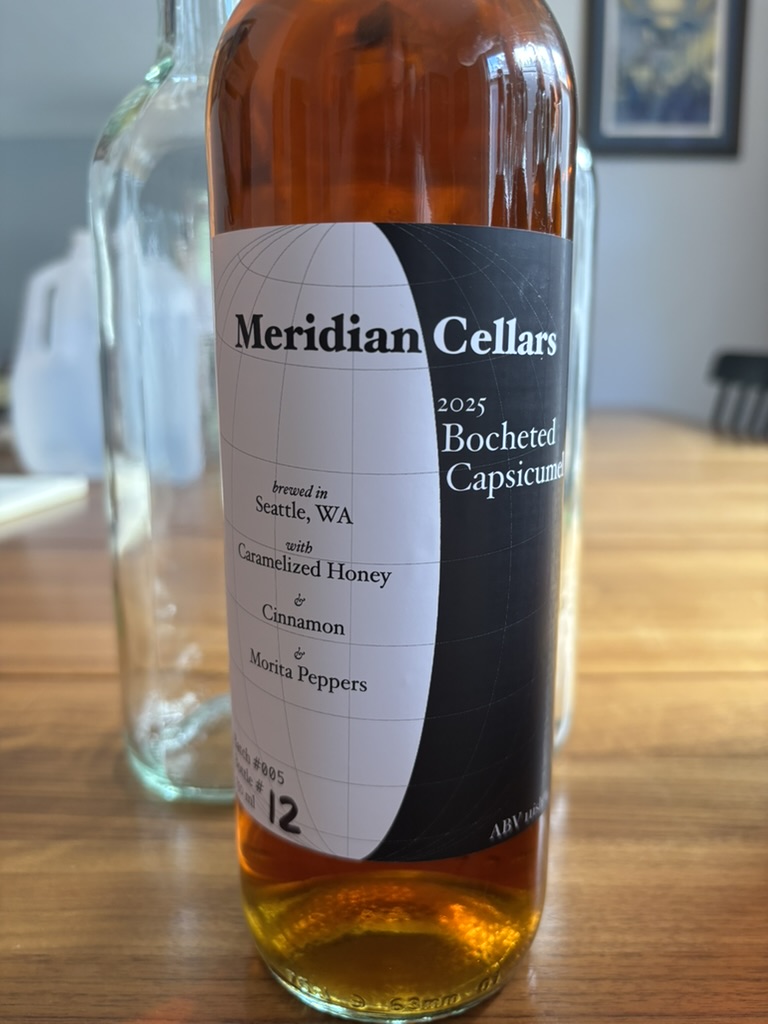
Batch #005: Bocheted Capsicumel
- Status
- Bottled
- Batch Size
- 5 gal
- Starting Gravity
- 1.076
- Final Gravity
- 0.994
- Approximate ABV (before backsweetening)
- 10.76%
My first attempt at a bochet, aiming for a flavor profile I landed on by accident while making some arepas, and also an experiment with toasting honey using an immersion circulator.
- bulk clover honey, toasted
- medium toast french oak
- morita chile peppers
- cinnamon
- vanilla
Most Recent Update
Final tasting and bottling
The split peppers worked! There’s enough going on with this mead that I don’t get much of the actual capsicum flavor, but I do get a little smoke and enough heat to know the peppers are there. I was happy to bottle it at this stage.
Yield: 20× 750ml bottles, 4× 375ml bottles
Full Log
Toasted honey
- 10 lbs bulk clover honey
Measured 2 lbs of honey into each of 5 mason jars, leaving a generous headroom in each and lids just loose enough to allow air to escape. Held those jars in a 200ºF water bath for 20 hours.
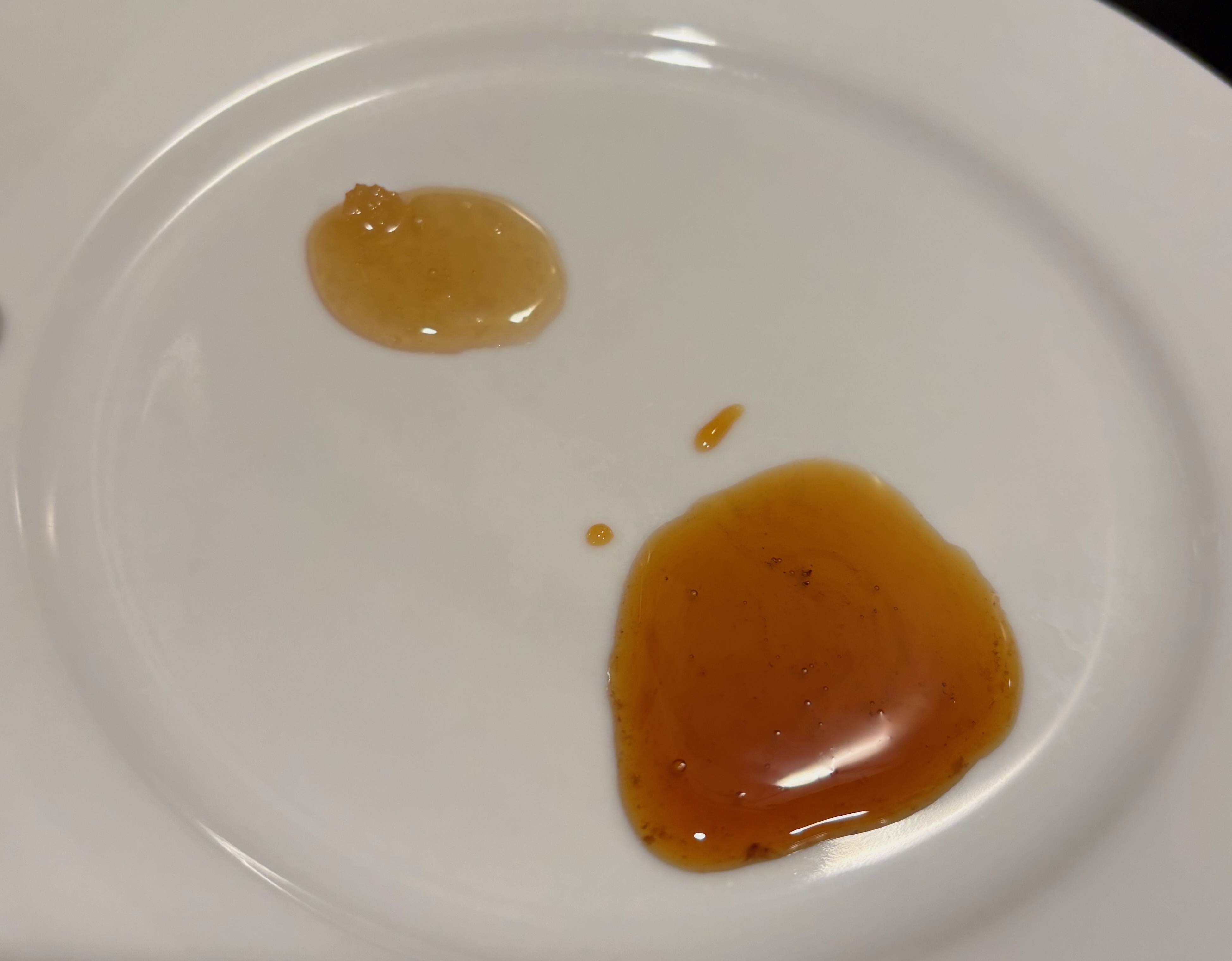
I was happy enough with the change in the honey—it developed some nice toasty and almost molasses-y notes—that I’d like to do a side-by-side comparison between sous vide honey and directly heated honey. The former is definitely easier and safer, but the latter is much faster and probably produces a deeper flavor.
Mixed must
- 4 gal bottled spring water
- 5 campden tablets
Mixed the now-toasted honey with water and sanitized the must with campden tablets.
Pitched yeast
- 11.5g Fermentis SafAle US-05 ale yeast
- 1¼ tsp LD Carlson Yeast Energizer (DAP)
- 3 tsp LD Carlson Yeast Nutrient
Measured the initial gravity at 1.076 (potential ABV of ~10%).
I noticed that even before picthing the yeast, the must already smelled like a dark beer.
Racked and added adjuncts
- 2 cinnamon sticks
- 3 morita chiles
- 1 vanilla bean
- 1 medium toast French oak staff
Measured the gravity at 0.994, so something like 100% attenuation, and between 10 and 11% ABV. There was a kind of mineral-y, white wine dryness to it, but the caramel flavors were still there, especially after letting a sample breathe a little.
I added the adjuncts, and I’ll be tasting it every other day for a week or two to see where the flavor lands; I don’t want to overextract either the cinnamon flavor or the morita heat.
I may have to backsweeten, but I’m adding two ingredients (oak and vanilla) that can make meads taste sweeter even if they’re somewhat dry, so I want to see where it lands with those before I add anything else.
Preliminary tatsing results
A great success so far! It’s still very dry, but the vanilla and oak really mellowed out many of the harsh notes. Strong scent of cinnamon on the nose and some lovely caramel notes on the tongue. I pulled the oak staff and the brew bag to prevent overinfusing.
I’m not getting much pepper, so I’ll probably add some more morita peppers later. Even though it doesn’t register as any sweeter than the last tasting, it’s gotten enough less mineral-y that I don’t think I’m inclined to sweeten it any further.
Added more moritas
- 4 morita chiles, split open
I added a few more peppers in a brew bag, this time torn open to expose more surface area to the mead. Fingers crossed!
Final tasting and bottling
The split peppers worked! There’s enough going on with this mead that I don’t get much of the actual capsicum flavor, but I do get a little smoke and enough heat to know the peppers are there. I was happy to bottle it at this stage.
Yield: 20× 750ml bottles, 4× 375ml bottles